
How to Start Fishing with Confidence: Simple Gear and Techniques That Actually Work
Posted by Sam Jacobs on Apr 16th 2026

There's a reason fishing has stuck around for thousands of years. It's not complicated.
But somewhere between YouTube rabbit holes and the fishing gear aisle at Bass Pro, a lot of beginners convince themselves it is!
The truth is, you can be on the water catching fish within a week of deciding you want to…and you also don't need to spend a fortune or memorize the entire taxonomy of freshwater species to do it.
Start With the Right Rod and Reel (Not the Fanciest One)
Walk into any sporting goods store and the sheer number of rod and reel options will make a person want to turn around and go home.
Don't do that.
For a complete beginner, a spinning combo in the 6-foot to 7-foot medium-light range is where it's at. Something like a Shakespeare Ugly Stik GX2 that’s paired with a size 2500 spinning reel covers about 80% of freshwater fishing situations.
It's forgiving, it casts easily, and if it gets dropped off a dock, it's also not the end of the world financially!
Monofilament vs. Braided Line: Pick Your Fighter
Spool that reel with 8-pound to 10-pound monofilament to start. Mono is cheaper and it’s easier to handle. It’s also going to be more forgiving when knots aren't perfect yet, and a beginner's knots are never perfect at first.
Braided line is fantastic, but it's also quite unforgiving when tied wrong and has almost zero stretch, which means that there will be more lost fish until the technique is dialed in.
The improved clinch knot is the one knot that is worth burning into muscle memory. Five wraps, thread it back through, pull it tight. That's it. That knot will cover a beginner for the first year easily.
Tackle That Actually Makes Sense
Here's a dirty little secret of fishing: the tackle industry is designed to sell tackle. A lot of it works, but a lot of it is also sold to fishermen and not fish.
A beginner doesn't need a tackle box the size of a carry-on luggage bag.
The Short List
Start with a handful of 1/8-ounce and 1/4-ounce jig heads that come paired with 3-inch Berkley PowerBait Minnow soft plastics in white or chartreuse.
Then you can add a dozen size 8 and size 10 Aberdeen hooks, a small pack of split shot sinkers, and a bobber or two. That's a complete rig for catching bass, crappie, bluegill, and perch in most lakes and ponds across North America.
A small Mepps Aglia spinner in gold (the number 2 size) is arguably the single most versatile lure ever made for freshwater beginners. It catches bass, trout, walleye, pike, and pretty much anything else that swims.
Throw that in the box and consider it a trump card.
Where Fish Actually Live
This is the part most beginner articles skip. Casting in random open water is how people go home fishless and then they feel frustrated. And who can blame them?
Fish are lazy and opportunistic. They hang out where structure meets food. In a pond or small lake, that means: the edges where weeds meet open water, any dock or fallen tree, the shady side of a bridge, and the mouths of any small inflow creeks.
On a river, it's the seams where fast water meets slow water. Those transition zones are like the fish equivalent of a diner booth right next to the breakfast buffet.
Reading the Water Without Fancy Equipment
A polarized pair of sunglasses is genuinely one of the most useful pieces of fishing gear someone can own. They cut the glare off the water and suddenly it's possible to see structure, depth changes, and sometimes even fish themselves. A decent pair from Costa or even a $20 pair from Amazon does the trick.
Show up at a lake early in the morning (as in before 8 a.m.) in the summer, and fish will often be visible near the surface in the shallows. That's not luck. That's just understanding that fish are cold-blooded and use shallow and sun-warmed water in order to regulate themselves in the early morning hours. Take advantage of it.
The Numbers Don't Lie
Fishing is more popular than most people realize. In 2023, 364 million pounds of fish were caught recreationally in the United States alone. That's not a niche hobby. That's literally millions of people doing something that works, repeatedly, all over the country.
The fish are there. People are catching them. The barrier to entry is genuinely low.
Technique: How to Actually Present a Bait
Gear is just the beginning. The presentation (like how the bait moves through the water) is precisely what gets fish to commit.
The Slow Roll and the Twitch
With a jig and soft plastic, cast it out, let it sink to the bottom, and then reel it back in slowly with the occasional small lift of the rod tip.
This "slow roll with a twitch" mimics an injured baitfish dragging along the bottom, and it drives bass and crappie absolutely crazy.
With a spinner like that Mepps, the retrieve just needs to be steady enough to keep the blade spinning. Too slow and it dies. Too fast and the fish spook. A medium-speed and steady retrieve right below the surface is the sweet spot.
Where Beginners Actually Go Wrong
The biggest mistake new anglers make isn't the gear. It's patience.
Fishing isn't always slow, but it usually rewards people who stay in one productive spot for more than five minutes. Give a spot at least 15 to 20 good casts before moving on.
Work different depths and at different angles. Most beginners will abandon spots right before they would have caught something.
A Word on Licenses and Regulations
Every state requires a fishing license for anyone who is 16 or older in most cases, and they're shockingly affordable at usually between $10 and $30 for a resident annual license.
Get it online through the state wildlife agency website before hitting the water. Bag limits, size minimums, and restricted species vary by body of water, and ignorance isn't a legal defense. It takes just about 10 minutes to look up the rules, and it helps to keepthe fishery healthy for decades to come too.
The Last Thing Worth Saying
Fishing is forgiving. Bad days happen. Hooks get snagged. Lines get tangled. A fish throws the lure right at the boat after a five-minute fight.
None of that is a reason to quit, however. It’s just what another Tuesday is like out on the water. The people who get good at fishing are the ones who keep showing up, who keep paying attention, and who, honestly, don't take it so seriously that the bad days ruin the whole thing!
The water's there. The fish are in it. All it takes is showing up with decent gear and a little patience,and that part's genuinely easy.
About Author:
Sam Jacobs is a writer, and chief historian, at Ammo.com As a self-proclaimed outdoorsman, it’s his responsibility to use his knowledge and experience to educate others about ammunition, the outdoors, and conservation.
Featured Products


KIMBER
Kimber 2K11 Comp Coyote 9mm 5" Barrel 1-17 round and 2-20 round magazines
Built with superb attention to detail one at a time by skilled technicians, the 2K11 Comp delivers a significant reduction in felt recoil. This new integrated compensator is an elegant solution that...
GFORCE
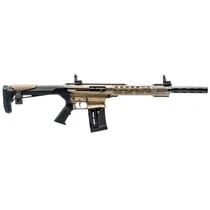
G-Force GF25 Bronze 12 GA 18.5" Barrel 5-Round Folding Sights
The GF25's standout feature is its American Flag Bronze Cerakote frame finish, which not only provides durability and corrosion resistance but also adds a distinct patriotic flair. The shotgun comes...

REMINGTON
Remington Universal Aluminum Shotgun Cleaning Kit 12/20 GA & .410
The Remington Universal Aluminum Shotgun Cleaning Kit provides the essential bore-cleaning tools needed to maintain three widely used shotgun chamberings: 12 gauge, 20 gauge, and .410 bore. Designed...

BARNETT
Barnett Wildcat UltraLite DC Crossbow Package with CCD & 4x36 Scope
The Barnett Wildcat UltraLite DC with CCD is a compact compound crossbow package built for hunters who want controlled de-cocking, crank-assisted operation and a narrow profile for use in blinds,...

BROWNING
Browning Trapper 2.75-Inch Two-Blade Folding Pocket Knife
The Browning Trapper is a traditional two-blade folding pocket knife designed for everyday cutting chores, outdoor use and general utility around camp, the workshop or the farm. Its classic trapper...
MOULTRIE
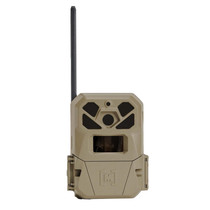
Moultrie MMC14125 Edge Pro 2
Moultrie Mobile sets the standard in cellular trail camera technology with the new EDGE 2 PRO cellular trail camera. EDGE 2 PRO boasts new, advanced features from Moultrie Mobile GPS and On-Demand...
RUGER
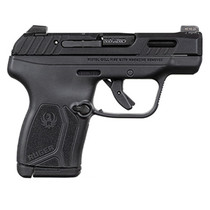
Ruger LCP MAX 380 Acp 2.8" Barrel 10+1 Round Black
Specifications and Features: Description: RUG LCP MAX 380 BLK MS 10RD DE Brand: Ruger Model: LCP MAX Type: Pistol: Semi-Auto Caliber: 380 AUTO Finish: Black Nitride Action: Double Action Only Stock:...
REMINGTON
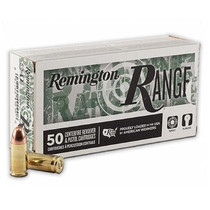
Remington Range 9mm 115 Grain FMJ 50 Rounds
Remington's Range 9mm 115 Grain FMJ ammunition is designed to deliver consistent velocity, accuracy, and reliability. With its high-quality components, this ammunition meets the highest standards for...

MOSSBERG
Mossberg MC2sc Optics Ready 9mm 3.4" Barrel 3-Dot Sights Black 11 Rounds/14 Rounds
The Mossberg MC2sc Optics Ready 9mm pistol is designed for concealed carry and self-defense. Its slim profile makes it easy to handle and maneuver in tight spaces. The 3.4-inch barrel length provides...
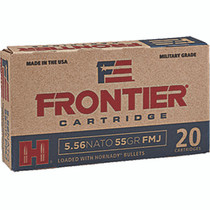
FRONTIER AMMO
Hornady Frontier FR200 5.56 NATO 55 GR FMJ 20 Rounds
Hornady's Frontier FR200 5.56 NATO ammunition offers a reliable choice for shooters. With its full metal jacket bullets, this ammo is designed for accuracy and consistency. The 55-grain weight...
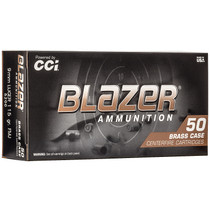
CCI
CCI 5200 Blazer Brass 9mm 115 GR FMJ 50 Rounds
CCI 5200 Blazer Brass 9mm 115 GR FMJ 50 Rounds is a reliable choice for shooters who demand high-quality ammunition. Built to SAAMI standards, this rimfire ammo is designed for performance and...